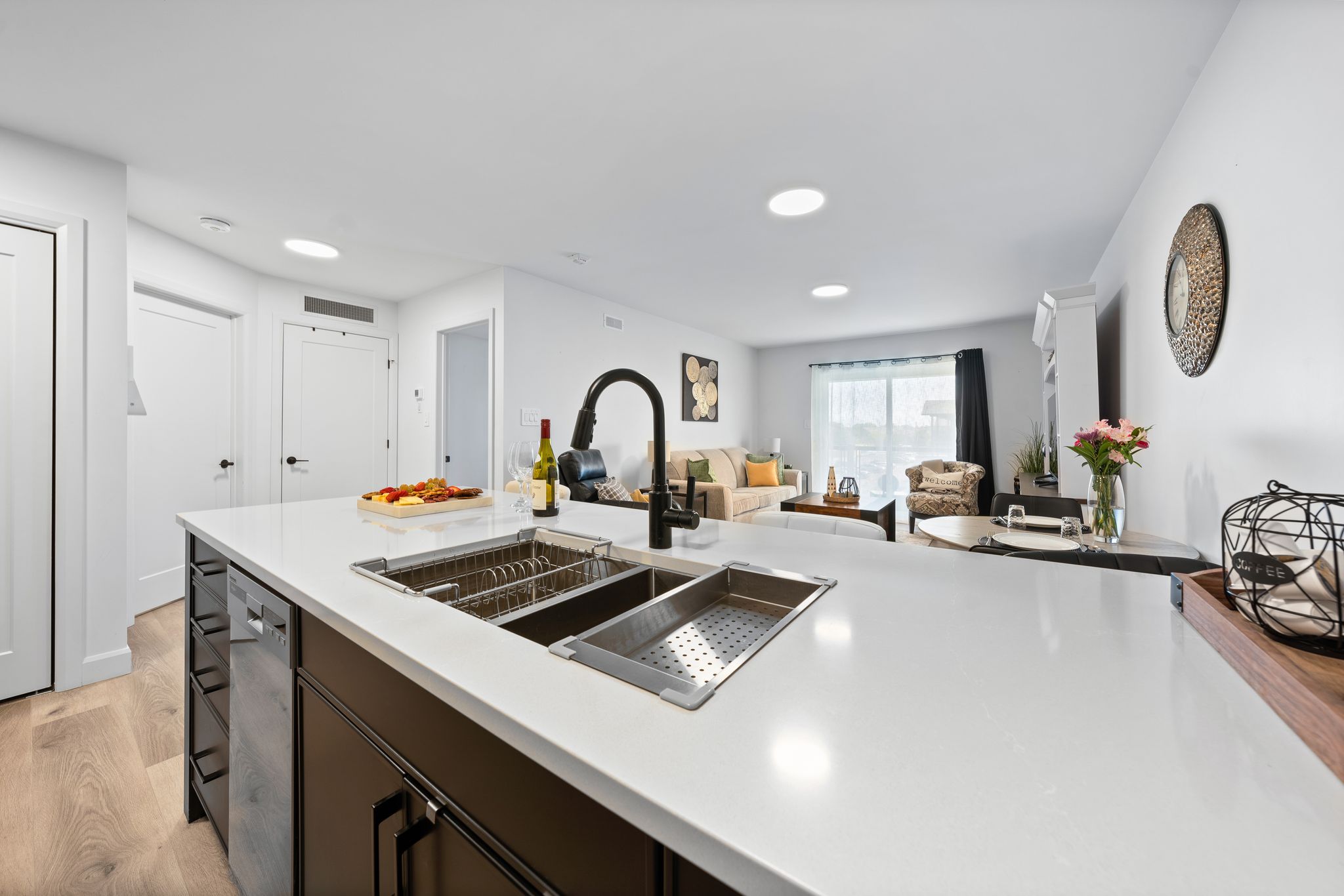
Pulling the trigger on downsizing can be incredibly difficult. Our lives are dynamic and ever-changing, and it can be hard to predict our future needs. What once was the perfect home for you and your family may no longer suit your lifestyle. For many, your home is a reflection of your passion, energy, and accomplishments — it holds years of memories. When the time comes to move on, knowing when to do it can feel just as hard as the decision itself.
The challenge with waiting is that you may encounter circumstances that are more difficult to manage the longer you put it off — large maintenance bills, the physical demands of packing and moving, and the emotional weight of sorting through a lifetime of belongings. Giving yourself ample time to address all of this on your own terms makes the difference between a stressful scramble and a smooth, empowering transition.
So when should you start thinking seriously about downsizing? Here are the three most important things to consider.
While you're still working, housing costs may fit comfortably within your budget. But as retirement approaches, income changes — and it can happen faster than expected. CPP and OAS combined average roughly $15,000–$16,000 per year for most Canadians. Even with additional pension income or savings, the median after-tax household income for Canadian seniors is approximately $61,000 — a meaningful reduction for households that were used to dual employment incomes.
When your housing costs begin to consume a disproportionate share of that income — mortgage, property taxes, utilities, and maintenance — it's worth doing the math. A smaller home doesn't just reduce your mortgage payment. It lowers your taxes, your heating and cooling bills, and your exposure to the kind of costly, unexpected repairs that older homes are prone to.
There was a time when your home felt barely big enough — kids in every room, never enough bathrooms, the living room a permanent construction zone of blanket forts and backpacks. Those were some of your best years. But they're a chapter, not the whole story.
Now you may find that you're living in a fraction of your home — one bedroom, the kitchen, maybe the back porch. The guest rooms sit empty most of the year. The yard that once brought joy now brings a to-do list. If you're honest with yourself, you might realize you're maintaining a home for a life you no longer live. A smaller, well-chosen property can actually feel like more freedom, not less.
This is the one most people don't fully think through. Canadian homeowners have accumulated extraordinary equity over the past two decades. And in Canada — unlike many other countries — when you sell your primary residence, you pay zero capital gains tax. The full proceeds are yours to keep under the principal residence exemption.
That means downsizing isn't just a lifestyle adjustment. It's a tax-free wealth event. Homeowners selling in markets like Toronto or the GTA and moving to a community like Prince Edward County, Belleville, or Quinte West are routinely banking $400,000 to $700,000 or more in net equity — money that can be invested, placed into a TFSA or RRSP, or used to generate income throughout retirement.
Downsizing 10 to 15 years before you retire, rather than waiting until you have to, means those dollars have time to grow. Every year you delay is a year that equity sits in your walls instead of working for you.
Getting the Timing Right
The 3–5 Year Window
Financial planners increasingly recommend downsizing 3 to 5 years before full retirement rather than immediately upon retiring. Here's why that window matters:
- 5+ Years Out Start decluttering and having honest conversations. Walk through the house and think about what you actually use. This is also the time to address any deferred maintenance — on your terms, not under pressure.
- 3–4 Years Out Begin exploring your target communities and property types. Meet with an agent who knows the local market. Understand what your current home is worth and what a right-sized replacement would cost. The earlier you have those numbers, the better positioned you are.
- 1–2 Years Out Prepare your home for sale with a plan, not in a rush. List in the spring or fall when buyer demand peaks. Use the equity you unlock to stabilize your retirement finances before you stop working — not after.
"Just 29% of retired Canadians feel very confident that their income will last for the rest of their lives."
— Newswire.ca survey of Canadian retireesThat statistic is sobering — but it's also preventable. The homeowners who downsize proactively, rather than reactively, are the ones who show up in retirement with options instead of constraints.
Where to Downsize
The Best Options in Our Region
If you're thinking about downsizing in this part of Ontario, you're in one of the most compelling corridors in the province. Prince Edward County, Belleville, and Quinte West each offer something different — and all three are attracting buyers from the GTA and beyond who are trading square footage for quality of life.
Walkable downtowns in Picton, Wellington, and Bloomfield, new bungalow communities, wine country, the Millennium Trail, and a vibrant arts scene. For buyers who want to feel like they're on a permanent vacation — without giving up a real home. Property taxes run 20–30% lower than the GTA.
The region's strongest healthcare infrastructure, Bay of Quinte waterfront, organized retirement residences, and a full range of urban amenities. Ideal for buyers who want the comfort of a larger city — restaurants, transit, Quinte Health — without paying big-city prices.
The most affordable option in the corridor, with a strong sense of community. Trenton and Frankford offer comfortable bungalows, independent living residences, and a quieter pace of life with quick access to both Belleville and the County.
The typical scenario we see: a homeowner sells in the GTA for $900K–$1.2M, purchases a comfortable bungalow or condo in this corridor for $450K–$600K, and deploys the difference into a retirement portfolio — all tax-free. It's one of the most effective wealth moves available to Canadian homeowners.

The County market, once a month — no noise.
CLAR MLS data, honest analysis, and what it means for buyers and sellers in Prince Edward County. One email a month.
- Sales volume, prices & days on market — straight from CLAR
- What's moving and what's sitting — and why
- Area guides and advice for buyers and sellers across PEC
No spam. Unsubscribe any time.